Supply Chain Solutions to the UK Defence Sector

Amentum, a global leader in advanced engineering and innovative technology solutions, GXO Logistics, Inc., the world’s largest pure-play contract logistics provider, Accenture, a leading global solutions and services company, and A.P.Moller – Maersk, the world’s largest integrated supply chain provider, have today announced a new alliance, Torus Defence Supply Chain, to help strengthen the future of the UK defence sector.

Torus will provide resilient, agile and integrated defence supply chain solutions, helping the UK defence sector adapt to the evolving threat landscape and build the agile capacity required to enhance sovereign capability.

Designed to help address the UK Government policy shift to readiness, visibility and data exploitation, Torus draws on alliance members’ proven capabilities and mission-critical expertise in military domain, procurement and supply chain. The alliance is underpinned by a shared commitment of collaboration, compliance and continuous improvement to solve complex challenges in the UK defence market.

Amentum will provide overall integration and programme management based on more than 60 years of support to UK defence operations, procurement, logistics support, programme/project delivery and transformation. Its global expertise, built over decades of defence, aerospace and national security experience in the USA and UK, ensures interoperability with allied sustainment systems and proven global buying power. Last September, Amentum announced plans to add another 3,000 people to its current UK workforce of more than 6,000 over the next four years.

• GXO will develop and operate innovative logistics solutions, leveraging its more than two decades of experience partnering with leading aerospace and defence organisations. With A&D operations spanning more than 30 global sites, GXO recently bolstered its UK defence capabilities through the acquisition of Wincanton, a longstanding trusted partner to the UK defence and industrial sector. GXO currently employs more than 60,000 team members across 450 sites in the UK and is a Gold Award level member of the UK’s Defence Employer recognition scheme for its work with the Armed Forces.

Accenture will lead digital reinvention with a core role to deliver digital enablement and integrated decision support capability. Accenture’s deep experience of defence logistics information systems and digital transformation will enable real-time, single-version-of-the-truth visibility and smarter, data and AI-powered decision making that balance readiness, cost and resilience.

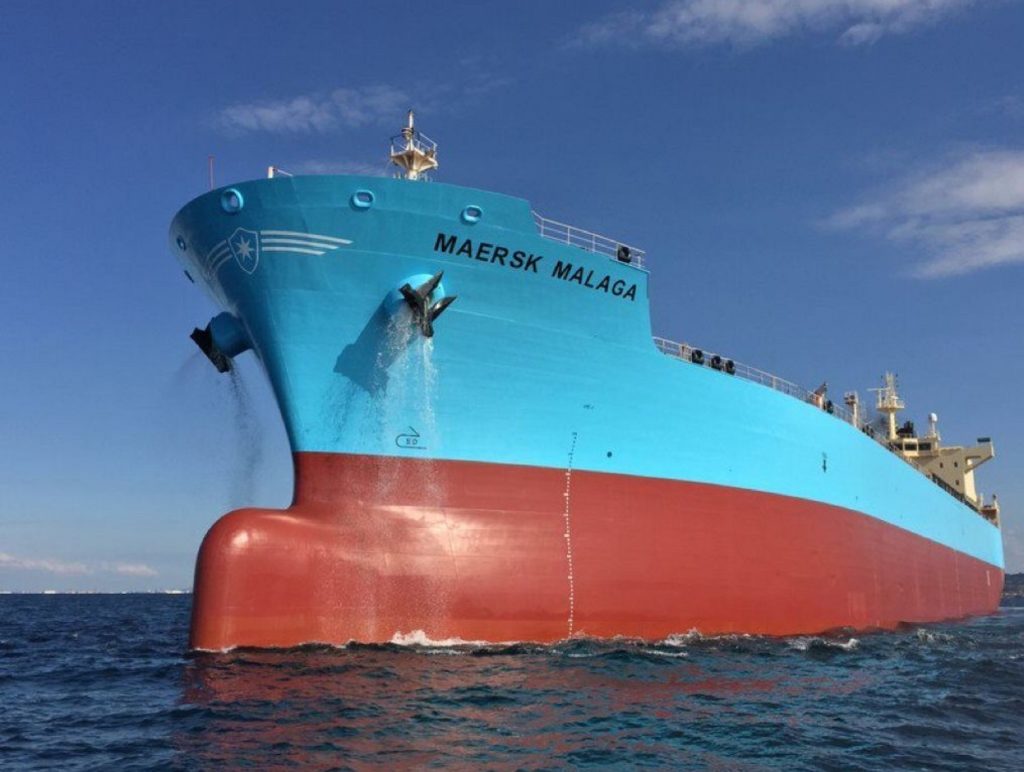
Maersk will provide global integrated movement solutions utilising its extensive network across multiple modes to enable global reach ensuring compliance with stringent security standards for defence and government cargo whilst ensuring the scale of its owned assets provide agility and resilience to allow defence to plan and react to a changing need.
Loren Jones, Amentum Senior Vice President, said: “Our combined global reach and military domain experience, specifically Amentum’s proven success in deployed logistics and integrating complex systems for the U.S. Government, perfectly aligns with the UK Defence sector’s requirement for future operational resilience and it’s imperative to move beyond systems optimised for just-in-time to ones of assured readiness and global reach.” 

Gavin Williams, Managing Director, GXO UK & Ireland, said: “The defence sector is tasked with responding to dynamic global challenges which has created substantial demands on its supply chains. GXO’s proven capability in the global defence sector optimises efficiency and builds resilience in complex supply chains, providing leading defence organisations with the assurance they will have the adaptive capacity required to deliver with confidence.”

Mark Smith, EMEA Defence Lead at Accenture, said: “This alliance brings together unmatched expertise in logistics systems and data-driven digital transformation – enabling scalable, interoperable solutions that enhance mission readiness. Accenture’s deep defence logistics knowledge and cutting-edge digital capabilities, refined through working with over 20 NATO countries, can help ensure operational continuity and resilience in complex global environments.”

Beyond focusing on supporting UK sovereign mission readiness, the alliance is committed to investing in UK infrastructure, contributing to economic growth and fostering digital skills in local communities.
New Series of Reach Trucks

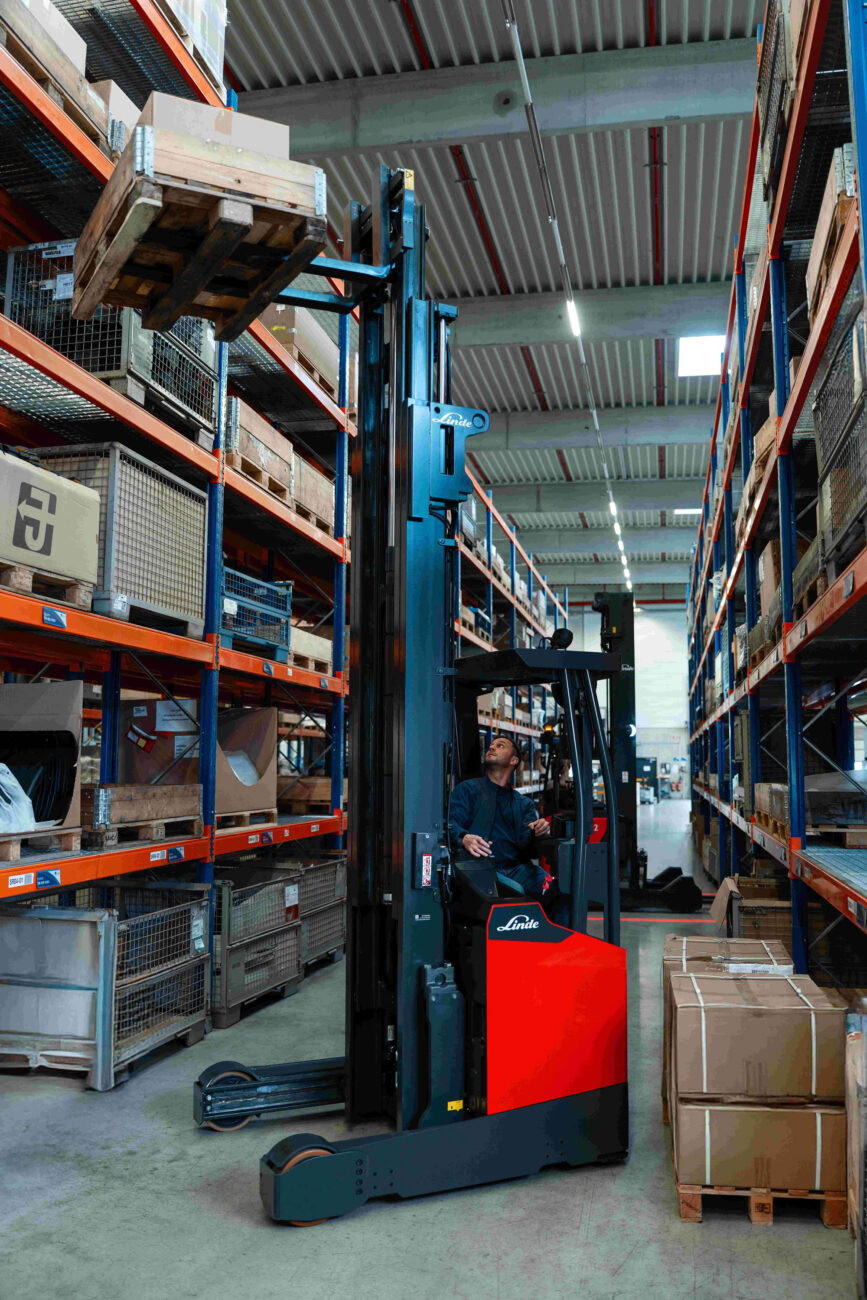
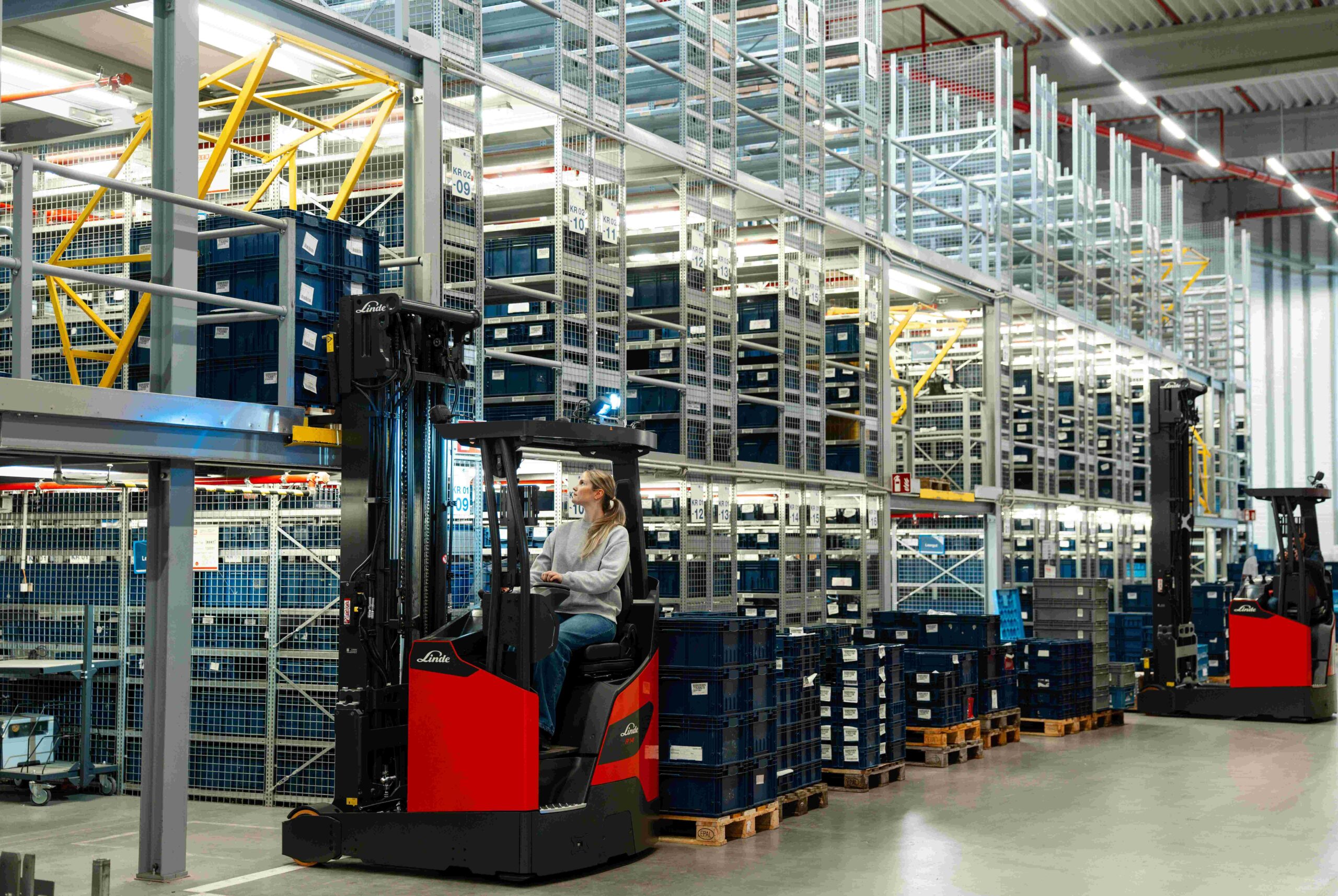
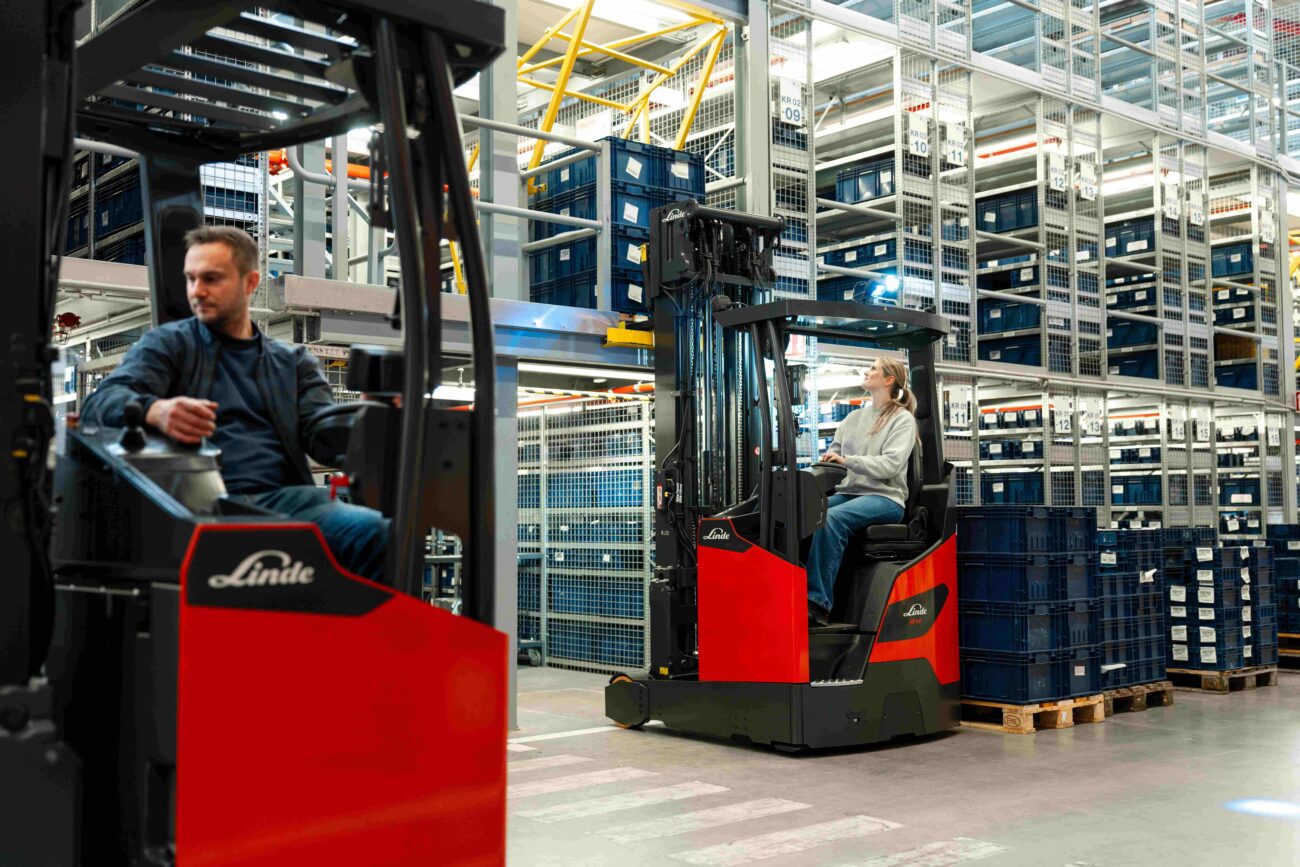
A new series of trucks from Linde Material Handling (MH) will be unveiled at LogiMAT 2026 in Stuttgart. The Linde Ri14 to Ri18 models are engineered for standard applications with low- to medium-intensity use. Offering a combination of affordability, focused performance, ergonomic benefits, and extensive safety features, these reach trucks are ideally suited for use in distribution centers and retail environments, as well as in the food, automotive and chemical industries. Their compact design with an integrated lithium-ion battery makes them ideal for operation in narrow aisles.

Optional upgrades, including ‘PowerDrive’ and ‘PowerLift’, are available to enhance travel and lift speeds, resulting in improved customer throughput. Furthermore, the vehicles are equipped with a variety of safety features. These include, among others, the standard all-wheel braking system and a shoulder guard protection. The driver’s workstation offers extensive comfort with complete decoupling from the chassis, excellent all-round visibility, additional space and versatile adjustability. Digital interfaces allow the reach trucks to be seamlessly integrated into operational IT systems, and the modular design facilitates the creation of customized solutions.

“The new reach trucks, which have a load capacity ranging from 1.4 to 1.8 tons, augment Linde MH’s existing portfolio. They are intended for the growing number of companies seeking compact, agile vehicles for single- and two-shift operations. Such trucks should be economical to purchase, high-quality, powerful, safe and comfortable for operators,” explains Alexander Schmidt, Senior Product Manager at Linde MH. “The Linde Ri reach trucks combine all these attributes, making them an excellent option for replenishment operations within the warehouse – that is, for transporting goods throughout the warehouse and performing storage and retrieval operations in block or rack systems.”

Optimized for typical warehouse applications

With a total length of 1,215 millimeters (l2 dimension), a turning radius of 2,709 millimeters (AST), and lifting heights of up to 11 meters, Linde Ri reach trucks optimize storage capacity utilization. They can be equipped with the optional PowerDrive and PowerLift functions to increase performance in goods handling. These options increase travel speed by 18 percent and lifting speed by 16 percent setting new performance benchmarks for this class of standard trucks. Two mast series ensure high residual load capacities. Mast functions are controlled ergonomically and with millimeter precision via the Linde Load Control system. Drivers can quickly and easily control the direction of travel and speed with the Linde dual pedal control. A lithium-ion spare battery is available for multi-shift operation to ensure continuous vehicle availability.

Comprehensive safety package

The comprehensive safety package focuses on protecting the driver, goods and infrastructure. An important competitive advantage is the standard hydraulic load wheel brakes, which provide short braking distances regardless of the load’s weight or the mast’s position, giving the driver maximum control over the vehicle. Another standard feature is the Linde Curve Assist. This system automatically adjusts the driving speed around curves based on the steering angle, thus increasing the vehicle’s stability. The elevated seat position improves the driver’s visibility of the load and surroundings. Optional features such as a reinforced glass roof, shoulder guard protection, and innovative assistance systems like the Linde Safety Guard, which warns of potential collisions, and the Rack Protection Sensor, which prevents collision damage to racks, provide additional protection.

Ergonomic benefits prevent fatigue

The driver’s workstation is fully decoupled from the chassis, effectively absorbing shocks and vibrations, which helps prevent premature fatigue. Together with the suspension-mounted driver’s seat, the workstation effectively absorbs shocks and vibrations experienced by the driver. Components such as the steering wheel, seat, and optional height-adjustable pedal plate can be adjusted individually to suit the driver and ensure a relaxed working posture. The low, wide entry with a non-slip surface makes it easier for operators to safely and frequently enter and exit the truck during daily warehouse operations. Numerous compartments provide ample storage space.

Reliable service

The robust design of the reach trucks, along with maintenance-free components such as the induction-hardened mast guide rails, ensure high availability and durability while reducing operating costs. All service-relevant components are easily accessible, which shortens maintenance times. Thanks to modern electronic architecture, software updates and new vehicle functions can be installed remotely over the air. The standard 14.3 kWh integrated lithium-ion battery is particularly energy-efficient and can be replaced with a more powerful 21.4 kWh battery if performance requirements increase.

Strait of Hormuz and the Supply Chain

Tensions around the Strait of Hormuz are forcing supply chain leaders to ask a question most would rather not face: if this corridor closes, how would we actually respond?

Jonathan Barrett (pictured, below), CEO, Kallikor, provided this comment:

“The challenge is that these plans often rely on assumed responses rather than tested outcomes. In practice, it can be difficult for organisations to see how different decisions – rerouting shipments, adjusting sourcing, reallocating inventory or changing service commitments – will actually behave across the entire supply chain once disruption begins.

“We’ve seen this before through the Suez Canal obstruction in 2021 and the Red Sea shipping disruption in 2023–2024, when pressure in one part of the global trading system forced companies to make rapid operational choices with limited visibility into the wider consequences.

“Many companies we work with have an answer on paper for how they would respond to disruptions like these. The ones with most confidence in that answer have already tested it — running scenarios to see how those decisions will actually behave across the supply chain before disruption forces the choice.

“The organisations navigating disruption best are rarely the ones reacting fastest. They are the ones that have already explored the scenarios and understand how their supply chain will behave before disruption forces the decision.”

Humanoid Hype? Get Real

The hype around humanoids in logistics needs to take a reality check when it meets the warehouse floor, writes Denis Niezgoda (pictured, below), CCO of Locus Robotics.

At the International Robot Exhibition in Tokyo humanoids stole the show once again. Machines that walk, grip, and gesture like us have an undeniable magnetism, part science fiction promise, part genuine engineering marvel. Yet behind the spectacle, logistics leaders are asking whether these machines deliver demonstrable ROI, or if the industry is chasing a compelling idea that cannot yet scale.

Investment banks are certainly bullish. Morgan Stanley forecasts a global humanoid robot market worth $5 trillion by 2050, with deployment rates eventually reaching one machine for every ten humans. Those forecasts may well prove directionally right over decades. But logistics buyers don’t invest on 2050 narratives, they invest based on what can be deployed, integrated, and scaled in the next 12–24 months.

Innovation is only real when scaled

I’ve had countless conversations with CEOs in this industry who express frustration about being trapped in endless pilots and struggling to achieve meaningful traction. The pattern is familiar; exciting technology, impressive demonstrations, but no clear path to the kind of measurable, referenceable customer value that drives genuine adoption. What’s changed in warehouse automation is that customers are no longer rewarding novelty, they’re rewarding repeatable, referenceable outcomes delivered fast, in brownfield sites, under real volatility.

While there has become a hyperfocus on humanoids, most of the attention is driven by the fact that they generate a big reaction. We live in a world where reaction doesn’t equate to return on investment. Tim Tetzlaff, Global Head of Digital Transformation at DHL, captured this dynamic perfectly when he said: “Innovation is only real when scaled. Otherwise, it’s just a nice idea.” Too many robotics companies have compelling ideas but struggle to scale effectively, missing the chance to create meaningful customer impact. In practice, the winners in this cycle are the firms that scale through software-defined flexibility, not the ones chasing the most cinematic demo.

There’s a real risk that funding will dry up as ambitions collide with reality. Training robots through thousands of hours of simulation can produce impressive physical capabilities, but it grants them little genuine understanding of how the real world actually works. Warehouses are messy, stochastic environments: congestion, mixed Stock Keeping Units (SKUs), shifting priorities, human variability, and peak swings that don’t show up in lab conditions. Physical AI only becomes meaningful when systems learn from millions of real tasks in production. Purpose-built fleets do that every day, they don’t just learn how to move, they learn how the operation actually behaves. Purpose-built warehouse robots accumulate vast operational experience in the environments they are designed to serve. They know the warehouse floor because they have worked it.

The Gap Between Demo and Deployment

This gap between demonstration and deployment is the crux of the matter. Promotional videos may show humanoids performing acrobatic feats, but none can yet walk into an unfamiliar warehouse and reliably execute the complex, repetitive tasks that drive logistics operations. The most advanced humanoid models on the market today are still positioned as research platforms rather than production ready solutions. Production environments don’t just need a capable robot, they need an orchestration layer that can integrate with Warehouse Management Systems (WMS), Enterprise Resource Planning (ERP), and Manufacturing Execution Systems (MES), balance priorities in real time, and keep performance stable through peak periods.

As such, I expect 2026 to bring a wave of consolidation across the robotics sector, as companies locked into humanoid development face mounting pressure to demonstrate tangible commercial value. We’ll see the hype start to fade as customers and investors demand real world results, creating an environment where only the purpose built will survive.


The Opportunity in Front of Us

Here’s the reality that often gets lost in the humanoid excitement, we estimate that less than ten percent of warehouses globally have sufficient levels of automation today. The opportunity isn’t to build robots that look like humans. It’s to build the right solutions for the right tasks. That’s also why flexible automation is winning: operators want capability they can deploy in weeks, scale up or down, and reconfigure when volumes or product mix shift. In a world of uncertainty, adaptability is the real throughput advantage.

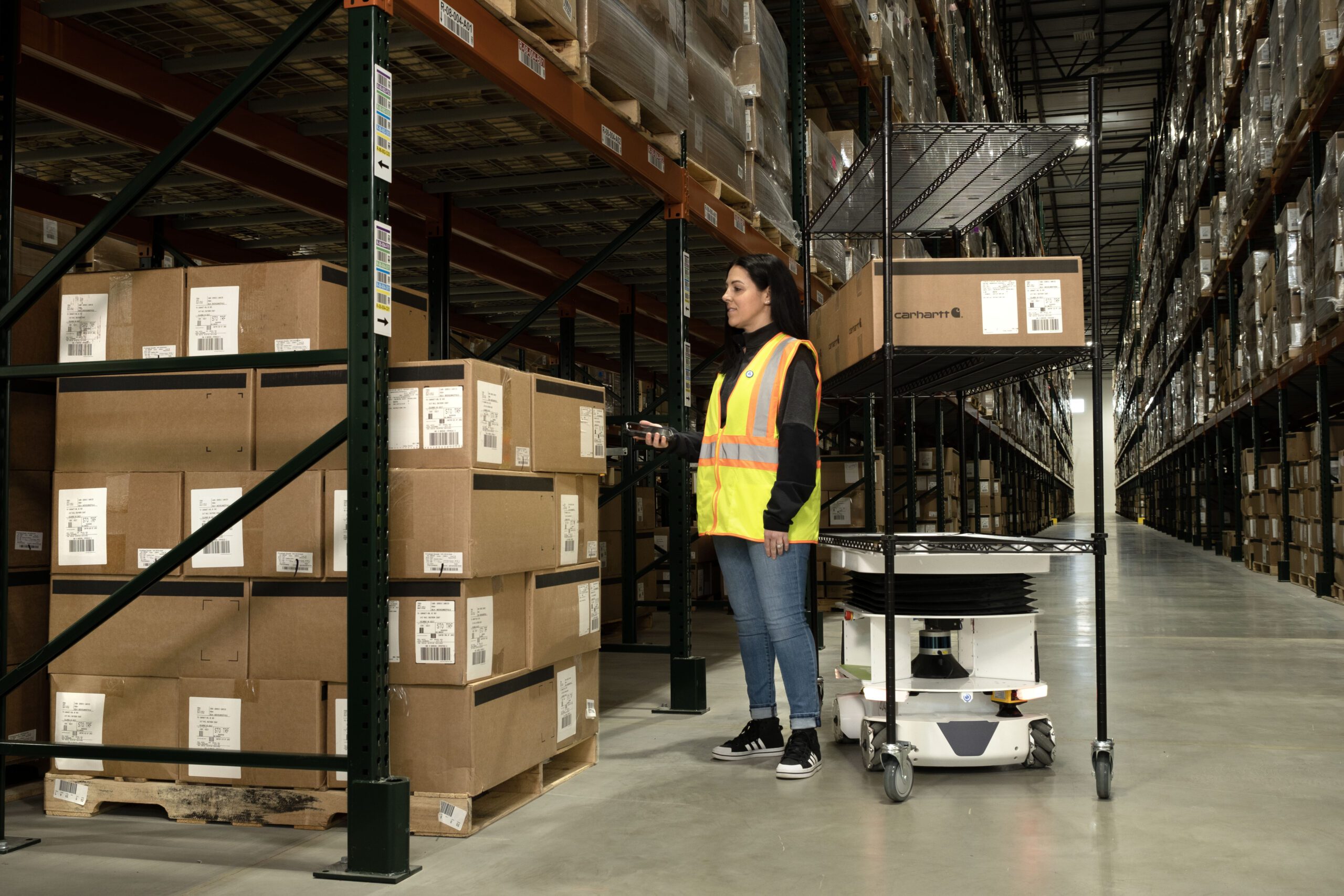
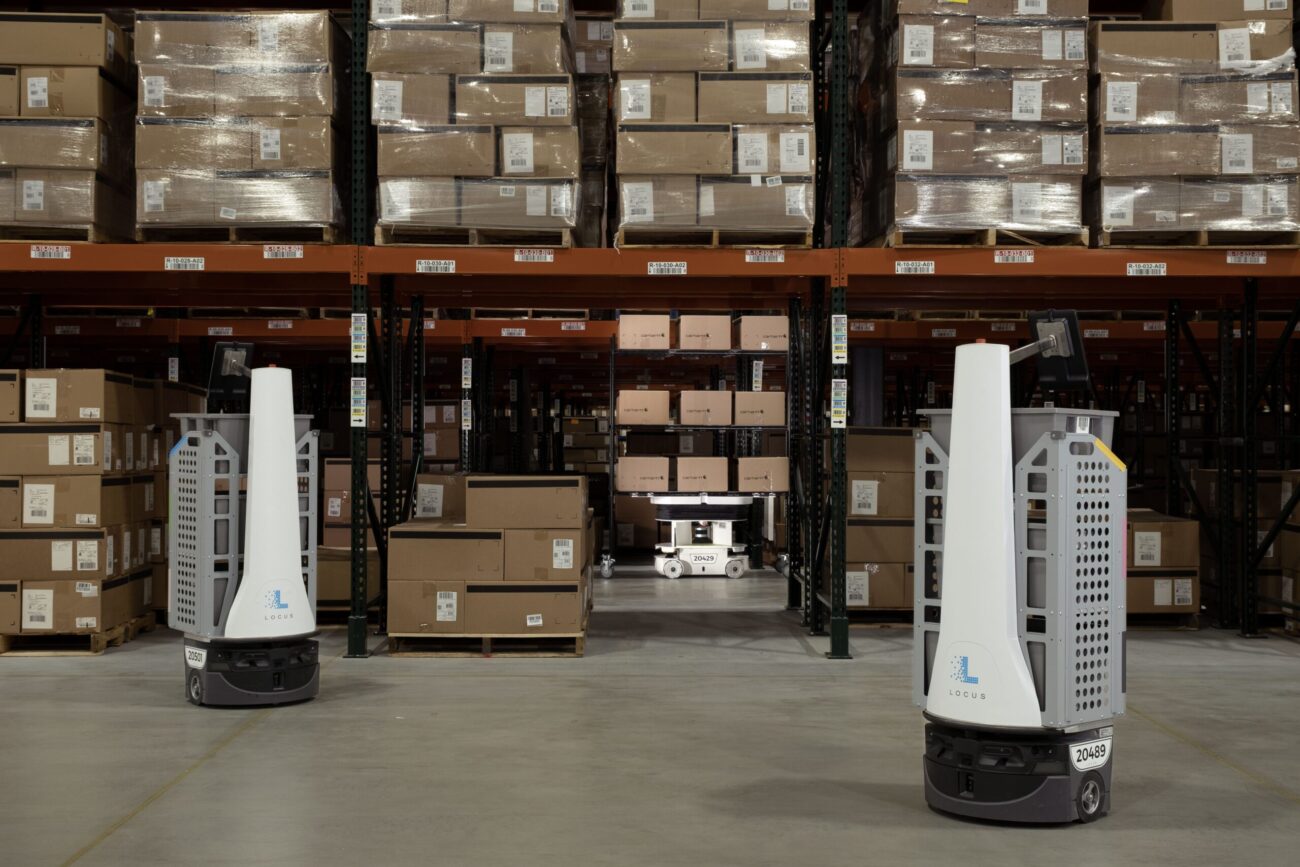
At Locus Robotics, we’ve moved beyond Person-to-Goods automation to define an entirely new category: Robots-to-Goods. Robots can now autonomously pick, move, and replenish inventory, performing tasks that previously required multiple human touches. But the hardware is only one piece of the puzzle. The real breakthrough comes from integrating Agentic AI with Physical AI to create systems that sense, decide, and act as one. The value isn’t one heroic robot, it’s a software-defined operation that keeps improving because it learns from the work. Warehouses become cohesive ecosystems rather than disconnected islands of automation.

The Financial Times suggests Japan, with its shrinking population and cultural openness to robotics, could become one of the first major democracies to experiment with widescale humanoid adoption. Perhaps. But for logistics leaders making investment decisions today, the question is not whether humanoid robots are impressive, they unquestionably are, but whether they can deliver the demonstrable, referenceable ROI that operations demand. Purpose built robotics already can and already do.

Subscribe

Get notified about New Episodes of our Podcast, New Magazine Issues and stay updated with our Weekly Newsletter.