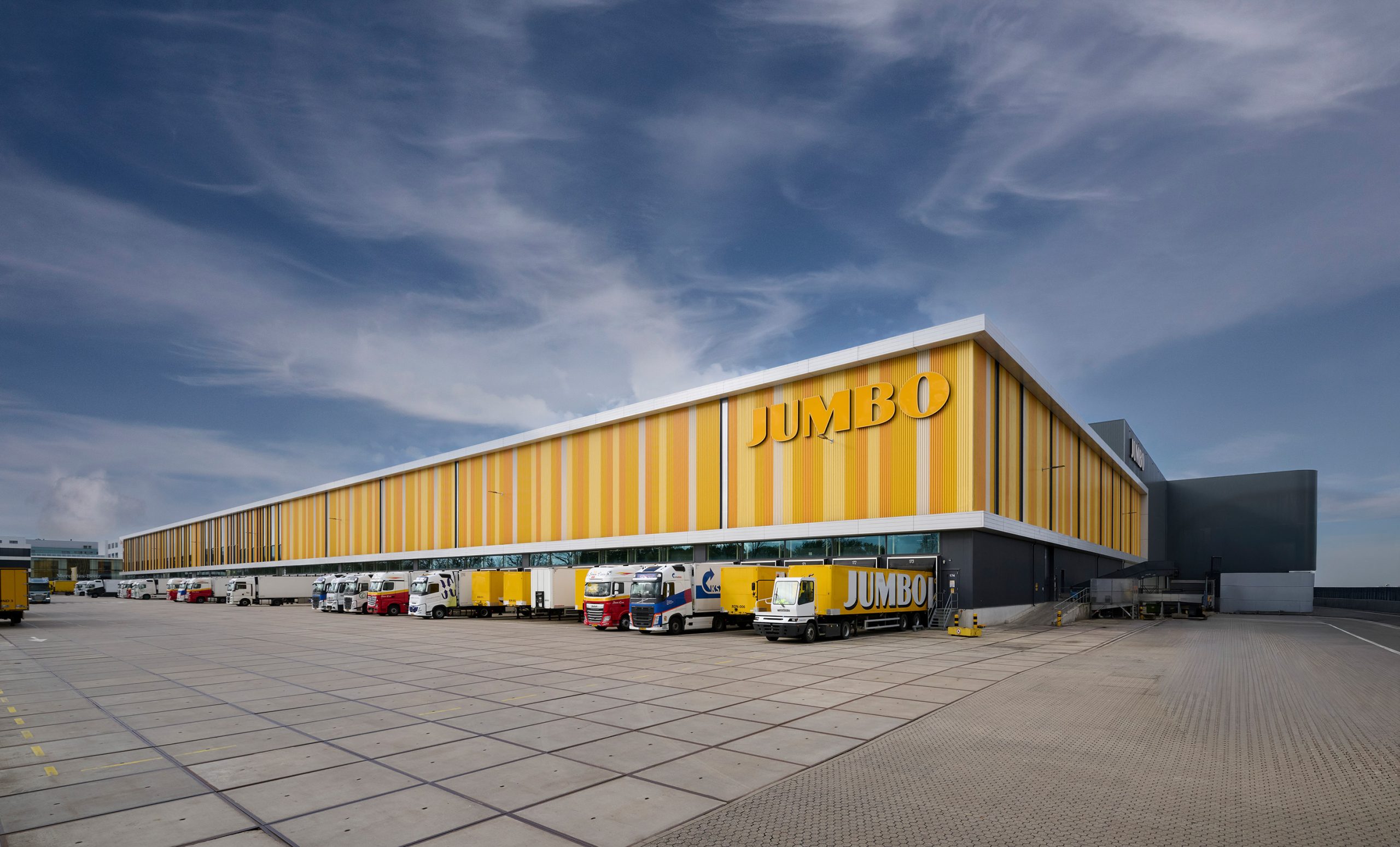
Jumbo, the second-largest food retailer in the Netherlands, has been operating a highly automated fresh logistics centre that sets the pace for the entire supply chain without taking the lead role.
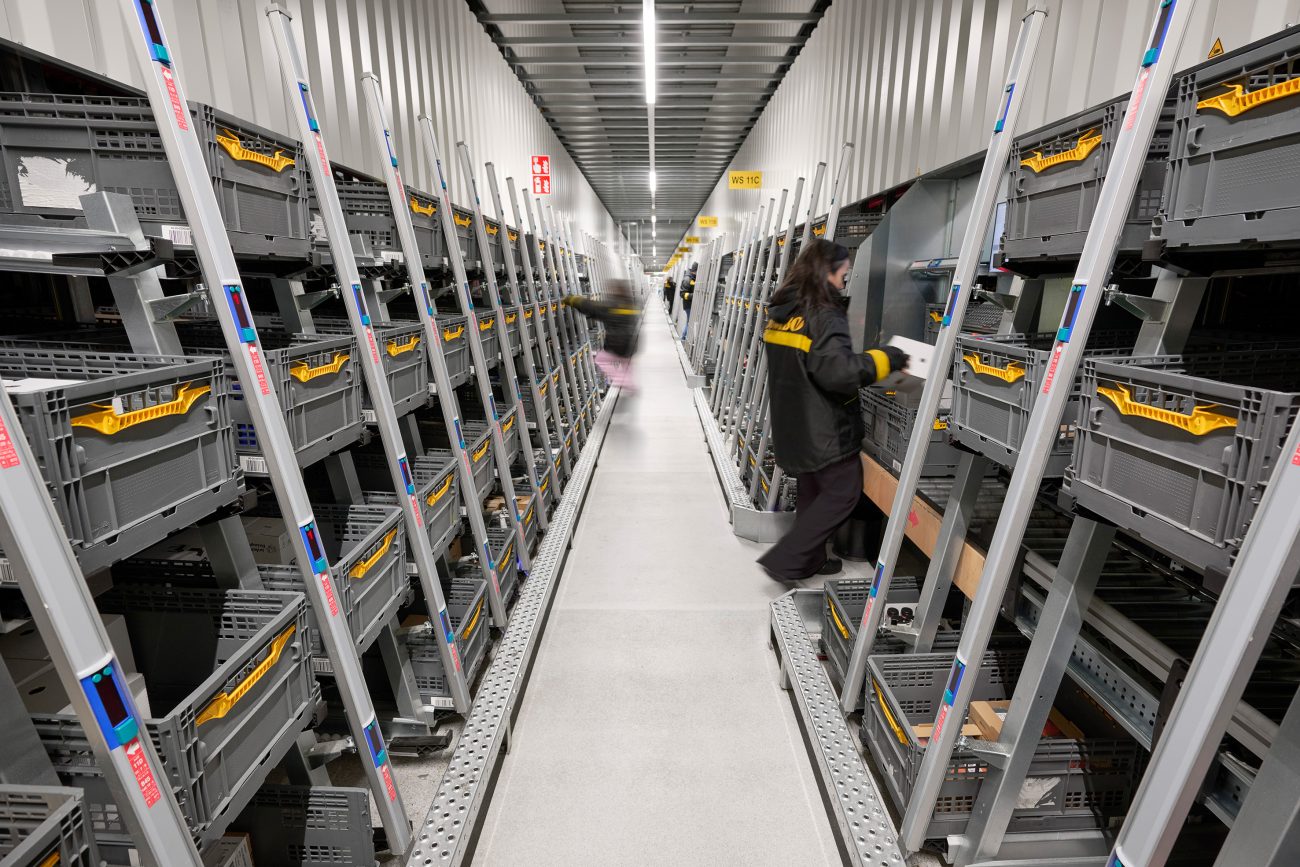
At its National Distribution Centre in Nieuwegein, Jumbo and WITRON unveil a concept that redefines the role of modern logistics hubs. The focus: speed, availability, and agility. Covering 40,000 square meters, the facility supplies over 725 stores in the Netherlands and Belgium with nearly 3,000 different fresh and ultra-fresh items, including dairy products, a wide selection of cheese, meat products, tapas, salads, chilled beverages, and much more. At an ambient temperature of +2 degrees Celsius, more than one million units can be picked daily using OPM (30 COM machines), AIO, and CPS modules. A fully automated shipping buffer ensures just-in-time dispatch of store-friendly stacked roll containers to the markets.
The fresh distribution centre marks the second successful collaboration between Jumbo and WITRON, following a high-performance dry goods facility. Equipped with OPM (31 COM machines), DPS, and CPS, this site can pick up to 565,000 cases on a peak day from a range of 14,300 items.
DC Heart of Supply Chain
The Dutch retail group faced a series of challenges that necessitated the construction of one of Europe’s most ambitious logistics platforms. These challenges included expected labour shortages in the future, expanding assortments in both the dry and fresh food sectors, rising consumer expectations – especially for fresh products – and growing demand for speed in both stores and online channels. Today, the highly automated fresh logistics centre in Nieuwegein, designed and implemented by WITRON as a lifetime partner, serves as the strategic centrepiece of a supply chain that is seamlessly orchestrated, adaptive, and more customer-focused than ever before. Because the consumer is the true pacesetter.
Mechanics and IT
The central distribution centre for fresh products (CDC) is designed for a daily peak capacity of 1.06 million picking units. A modular expansion for future growth has already been considered in the overall concept. All logistics areas are connected by a conveyor network that includes more than 670,000 pallet, tray, and tote storage locations, as well as 120 stacker cranes. Everything is controlled by a highly functional WITRON warehouse management system. All IT and mechanical components have been designed, manufactured, and put into operation by WITRON.
Labour, Range, Freshness
When Jumbo began shaping the future of its supply chain a few years ago, it became clear that existing structures could not meet the challenges ahead. “We expected to face challenges in the labour market, anticipated a growing number of SKUs, and set out to fundamentally redesign our fresh logistics with a clear focus on maximum customer service, freshness and sustainability,” recalls Karel de Jong, Supply Chain Director at Jumbo. The company aimed to broaden its SKU portfolio, sharpen assortment differentiation, and drive greater agility across its fresh logistics operations. At the same time, regional warehouse space became increasingly constrained as the product range continued to expand. The solution developed focused on centralizing, automating, and streamlining processes.
Precise time management is of critical importance, especially in the ultra-fresh segment. Temperature, daily operations, and weather conditions immediately impact volume.
“For us, agility means being able to respond very quickly to changing demands. A shift in weather means a shift in demand, and we need to be ready to respond,” says de Jong. “Freshness must reach the consumer’s table without delay – and not remain in the warehouse.”
The project marked a significant shift in WITRON’s internal approach. The warehouse has evolved from a standalone entity into a seamlessly integrated organ within the supply chain orchestra. Johannes Meissner, WITRON’s Technical Managing Director describes the development as follows: “The DC is no longer an isolated system, but an integral part of our customer’s organism. Only then can supply chains truly be optimized.” This transformation turns the warehouse from a pure consolidation and buffering point into a key control instrument. de Jong adds: “However, the DC does not lead the orchestra. The customer does.” Symbolically, he portrays the warehouse as the ‘first violin’ in a finely tuned supply chain orchestra – vital, leading, and setting the tone, but always part of a greater harmony.
Technology in XXL
The Nieuwegein logistics hub, featuring both dry goods and fresh food distribution centres, ranks among WITRON’s largest projects worldwide. It is equipped with more than 60 COM machines, over 1.1 million pallet, tray, and tote storage locations, approximately 200 stacker cranes, and is designed for a maximum capacity of 1.6 million picks per day. With OPM, AIO, CPS, and the automated shipping buffer, the Upper Palatinate team leverages proven technology. It guarantees peak availability, since the DC is the core of supply for Jumbo customers in the Netherlands and Belgium. An onsite service team ensures seamless operation of all IT and mechanical processes.
Both partners emphasize that success is not a matter of machine count, but of the specific requirements within each area of use. How can the system be balanced? Since all items are delivered to the stores on roll containers, seamless coordination between the subsystems is crucial to achieve maximum consolidation and space utilization. According to de Jong: “Success is not about the next machine. It’s about a perfectly tuned overall concept, with a vital role for the operators and control room team.”
Result in the Store
Automation delivers measurable benefits for the stores:
• More SKUs – with an upward trend
• Automated stacking of goods onto roll containers, tailored to the store’s shelf layout
• Consolidation of cases (picked in OPM and CPS) with pieces and totes (picked in AIO)
• Highly efficient, route-optimized truck loading enabled by advanced optimization processes within the automated shipping buffer
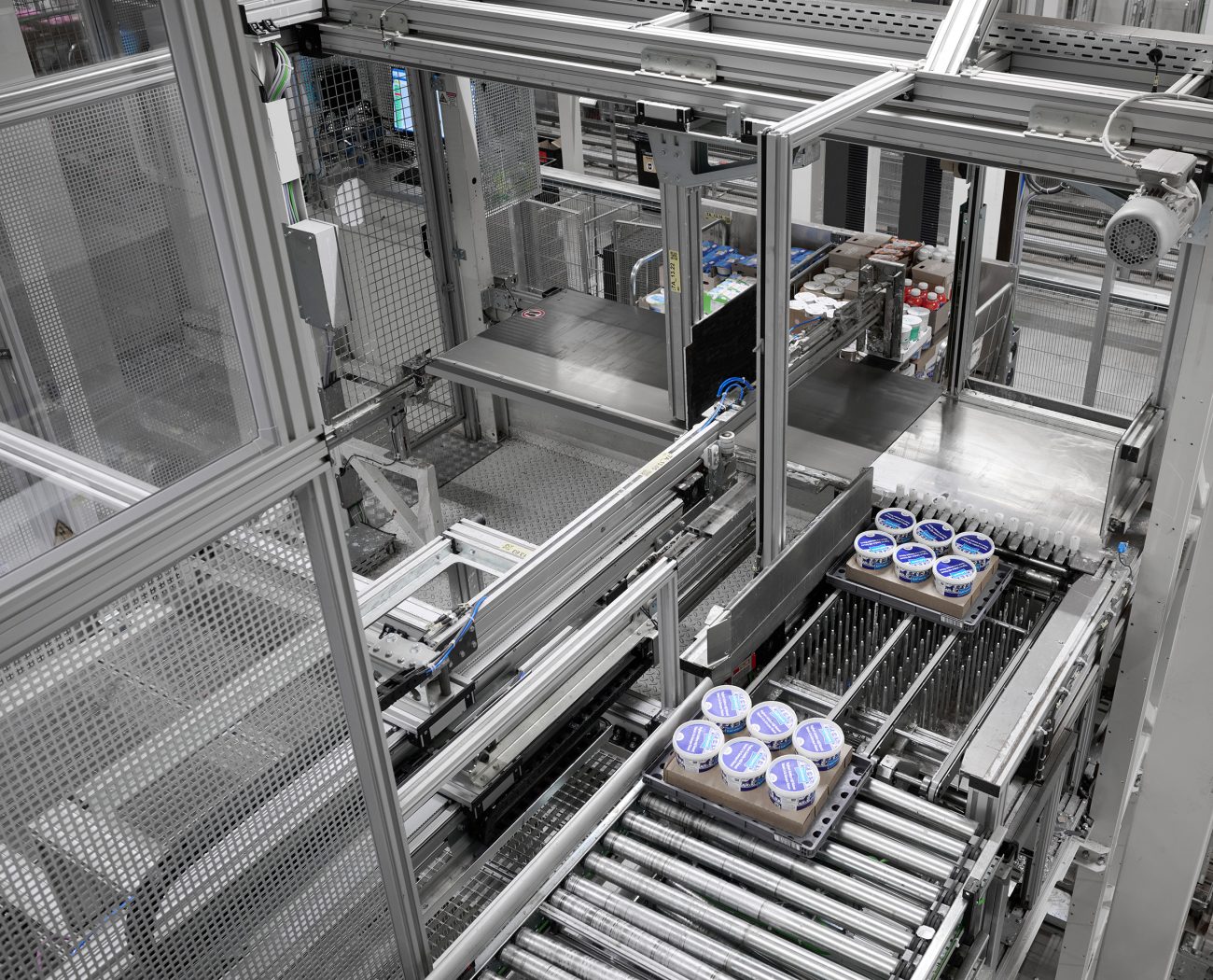
As a result, shelves in the store are replenished more efficiently, faster, and with less handling effort. In addition: processes previously managed via direct delivery – such as fresh fish – are now consolidated via Nieuwegein. And thanks to advanced forecast and replenishment processes, Jumbo delivers exactly what the stores truly need. The outcome for customers is enhanced freshness, a perfectly tailored assortment, and faster availability.
Packaging is a Core Competence
Automated processes require standardization, and this is reflected in the way various types of packaging are managed. “That’s why we have trained colleagues who have developed extensive expertise in this area,” says de Jong. Carton design, adhesive properties, stretch film, as well as cardboard and pallet quality are critical for material flow and load stability. WITRON and Jumbo took early action to identify critical packaging and deliver transparency to suppliers. The outcome is enhanced inbound control, resulting in more stable processes within the DC.
Employees at Jumbo were able to adapt effectively to their new tasks, moving from manual operations to an automated production process. Employees were able to gain detailed insights into future tasks within operated systems and engage in extensive exchanges with experienced users. “With a wealth of experience from projects implemented across Europe, North America, and Australia, we can offer customers comprehensive support in this vital field of change management,” emphasizes Meissner.
Technology can be purchased – culture cannot. Jumbo adopted lean principles with the Jumbo Production System (JPS), including shopfloor transparency, shift stand-ups, and a high degree of autonomous problem-solving by employees. Once a day, a central control meeting is held at the very centre of operations – not in an office, but in the work area. “Here, the colleagues analyse the previous day and review the tasks and goals for the upcoming shift. If this half hour goes well, it will be a good day,” says de Jong with a smile.
What measures can be expected next? Jumbo considers the supply chain to be an end-to-end network structure rather than a set of separate warehouses. Integrating stores, connecting with suppliers, optimizing transport routes, and automating processes – including in e-commerce, which is still handled manually today – are key pillars of the future strategy.
“Automation is not a standalone objective, but a tool applied where needed. Variety in our product range continues to define our corporate philosophy – driven by a clear focus on efficiency and economic viability,” states de Jong. Meissner gets straight to the point: “Automation built the foundation. The next chapter is all about end-to-end optimization.”