Globalisation Holds Firm, US and China Decouple

Globalisation remains at a historically high level – despite escalating geopolitical tensions, rising U.S. tariffs, and unprecedented uncertainty about future trade policies. This is one of the key findings of the DHL Global Connectedness Report 2026, released today by DHL and New York University’s Stern School of Business. Based on more than 9 million data points tracking international flows of trade, capital, information, and people, the report offers the most comprehensive view of globalisation available.

The report tracks globalisation on a scale from 0% (no cross-border flows) to 100% (borders and distance have no impact). The world’s level of globalisation was 25% in 2025, in line with the record high set in 2022.

Globalisation is holding its ground – and that alone speaks volumes about its value… From poverty to climate change, the world’s biggest challenges can only be solved through global thinking. The DHL Global Connectedness Report shows that countries and companies are not retreating behind national borders. That is good news. We strengthen global ties by connecting markets, businesses, and people so they can adapt, diversify, and unlock new opportunities – even in uncertain times.

said John Pearson, CEO of DHL Express.

At the same time, today’s globalisation level of 25% underlines how far the world is from being fully globalised. In many areas, international flows could expand further in the absence of policy constraints.

AI boom and race to beat tariff hikes fueled trade in 2025

Global trade grew faster in 2025 than in any year since 2017, excluding the volatile Covid-19 period. U.S. importers accelerated shipments early in the year ahead of tariff increases. U.S. imports later dropped below prior-year levels, but rising Chinese exports to non-U.S. markets helped sustain global trade volumes. Trade in AI-related goods surged as countries and companies raced to build AI infrastructure. AI-related products drove 42% of goods trade growth in the first three quarters of 2025, according to WTO figures.

Trade outlook: growth continues, even with higher tariffs

Looking ahead, recent U.S. tariff increases are expected to modestly slow trade growth in 2026 – but not stop it. Global goods trade is projected to expand by an average of 2.6% per year through 2029, in line with the past decade. One reason trade can keep growing despite U.S. tariff hikes is that most trade does not involve the U.S. In 2025, 13% of imports went to the U.S., and 9% of exports came from the U.S. In addition, many countries are pursuing new trade agreements to secure access to alternative markets.

Information flows face barriers, people flows reach new highs

Beyond trade, the report finds diverging trends across other international flows:

  • Capital: There is no broad shift of investment from foreign to domestic markets. Multinational firms still earn near-record shares of sales abroad. While announced greenfield foreign direct investment (FDI) fell in 2025, overall FDI flows rose, and cross-border M&A activity remained resilient.
  • Information: Over the past two decades, information flows delivered the largest globalisation gains. Since 2021, growth has slowed and become more volatile. Geopolitical tensions and restrictions on data flows may now be materially limiting the globalisation of information.
  • People: After collapsing during the Covid-19 pandemic, people flows have fully recovered. The latest data show international travel, student mobility, and migration all at record highs.

Singapore leads country ranking, Europe tops regions

In the report’s country ranking, Singapore again ranks as the world’s most globalised nation, followed by Luxembourg and the Netherlands.

Europe is the most globalised region, followed by North America and the Middle East & North Africa. The United Kingdom has the most broadly distributed flows worldwide. The United Arab Emirates recorded the largest increase in globalisation since 2001.

U.S.–China tensions affect only small share of global flows

The report also finds that ties between the world’s two largest economies – the U.S. and China – continue to weaken. However, these ties are surprisingly small in a global perspective. For example, trade between the U.S. and China accounted for 3.6% of world trade at its peak in 2015, before falling to 2.7% in 2024 and to only 2.0% during the first three quarters of 2025. The U.S.–China share of international business investment is even smaller – less than 1% in 2025.

No global split into rival blocs

Even as the U.S. and China decouple, most countries continue to engage with their longstanding partners. Over the past decade, only 4–6% of global goods trade, greenfield FDI, and cross-border M&A have shifted away from geopolitical rivals. Of these flows, most have not moved to close allies but to countries with flexible geopolitical positions, such as India and Vietnam. Overall, the world economy remains far from a broad split into rival blocs.

The politics and policy surrounding globalisation are much more volatile than the actual flows between countries… “Global trade patterns changed more in 2025 than they do in a typical year, but less than they did during other recent disruptions such as the early stages of the war in Ukraine. Sound decision-making requires a calibrated view of how much global business ties are really changing. The risks to globalisation are real, but so is the resilience of global flows.

said Prof. Steven A. Altman, Director of the DHL Initiative on Globalisation at NYU Stern’s Centre for the Future of Management.

Traded goods and greenfield FDI reach record distances

Geopolitical tensions and supply chain concerns have led many observers to expect a shift from globalisation to regionalization. In 2025, however, traded goods travelled the longest average distance on record (5,010 kilometres). The average distance for greenfield FDI projects also rose to a new high (6,250 kilometres). Most other international flows are stretching over longer distances as well, and longer distances indicate less regionalization. Predictions of a broad move from global to regional business have not materialized – at least not yet.

Published regularly since 2011, the DHL Global Connectedness Report provides reliable insights on globalisation by analysing 14 types of international trade, capital, information, and people flows. The 2026 edition is based on more than 9 million data points. It ranks the connectedness of 180 countries, accounting for 99.6 percent of global gross domestic product and 99.0 percent of the world’s population. A set of 180 one-page country profiles summarizes each country’s pattern of globalisation.


Read the full report here.

Instant Visibility & Automated Logistics Execution

Efficiency, sustainability and transparency are the key success factors of modern transport networks. The increasing complexity of global supply chains, the shortage of skilled labour and the growing pressure to meet environmental targets require solutions that intelligently connect data, processes and operational control.

Against this backdrop, the new strategic partnership between EPG (Ehrhardt Partner Group) and Bluerock TMS, a provider of a globally deployed transport management system, is creating a platform that combines mathematical route optimization with real-time transport management. The goal of the collaboration is to integrate EPG’s routing engine ‘Greenplan’ directly into Bluerock’s cloud-based TMS platform. This will give companies access to a fully connected system that unifies planning, execution and analysis of their transport operations in one central process.

As a global company with locations in Europe, North America and Asia, Bluerock coordinates millions of shipments each year through its modern and comprehensive TMS. Greenplan enhances these capabilities with a decisive next step.

While Bluerock provides full transparency on delays, capacity constraints, and operational deviations, Greenplan takes action where visibility alone reaches its limits. Greenplan doesn’t just calculate optimal routes that meet all customer criteria but continuously reoptimizes them. Using advanced mathematical models, routes automatically adapt to changing conditions in real time and can be released instantly at the push of a button.

The result is a genuine ‘beyond visibility’ effect: companies no longer just see what is happening, instead, they receive immediate, data-driven solutions and concrete options for action. This translates into measurable cost savings, improved on-time performance, and reduced emissions.

Dr. Clemens Beckmann, CEO Greenplan at EPG, explains: “With this partnership, we are combining mathematically precise route optimization and high-performance transport management in one system for the first time. Companies gain not only trans-parency but also immediate ability to act – automatically and in real time.”

Efficiency as a Key Competitive Advantage

Global supply chains are becoming increasingly volatile and interconnected. Fluctuating demand, traffic congestion and rising sustainability requirements increase operational pressure on fleet operators and shippers alike. Static or rule-based route planning methods that used to be sufficient can hardly keep up with these new challenges. The Greenplan algorithm analyzes traffic flows, delivery priorities, time windows and vehicle capacities simultaneously and simulates multiple scenarios within seconds. The most efficient routes are identified and automatically adjusted to current conditions.

Combined with Bluerock TMS, this creates a learning system that not only detects disruptions but can also react automatically upon them. Dispatchers immediately see delays, late arrivals or capacity constraints in the Bluerock dashboard, and Greenplan generates the optimal alternative without manual intervention. Rico van Leuken, CEO of Bluerock, adds: “Greenplan expands our TMS with a dimension that goes far beyond traditional visibility. Our customers receive a solution that combines the power of a globally deployed transport management system with the precision of mathematical optimization. The result is resilient, dynamic and future-ready networks.”


Global Reach and a Sustainable Outlook

Bluerock is used today by companies on three continents and is known for its intuitive usability and strong transparency features. With the integration of Greenplan optimization, the TMS gains an additional dimension and route planning becomes an active con-trol tool that unites economic efficiency with environmental responsibility.

For EPG, this partnership marks another milestone in expanding its international partner network. The company aims to connect technological innovations worldwide and to establish new standards in digital transport logistics together with leading providers. The combination of Greenplan’s routing technology with Bluerock’s global reach creates a strong foundation for this vision. “Sustainability and efficiency are not opposites but mutually reinforcing factors,” concludes Dr. Beckmann. “The same data that helps reduce costs also enables precise measurement and reduction of emissions. Modern logistics is becoming more economical and more responsible.”

Warehouse Technology Predictions

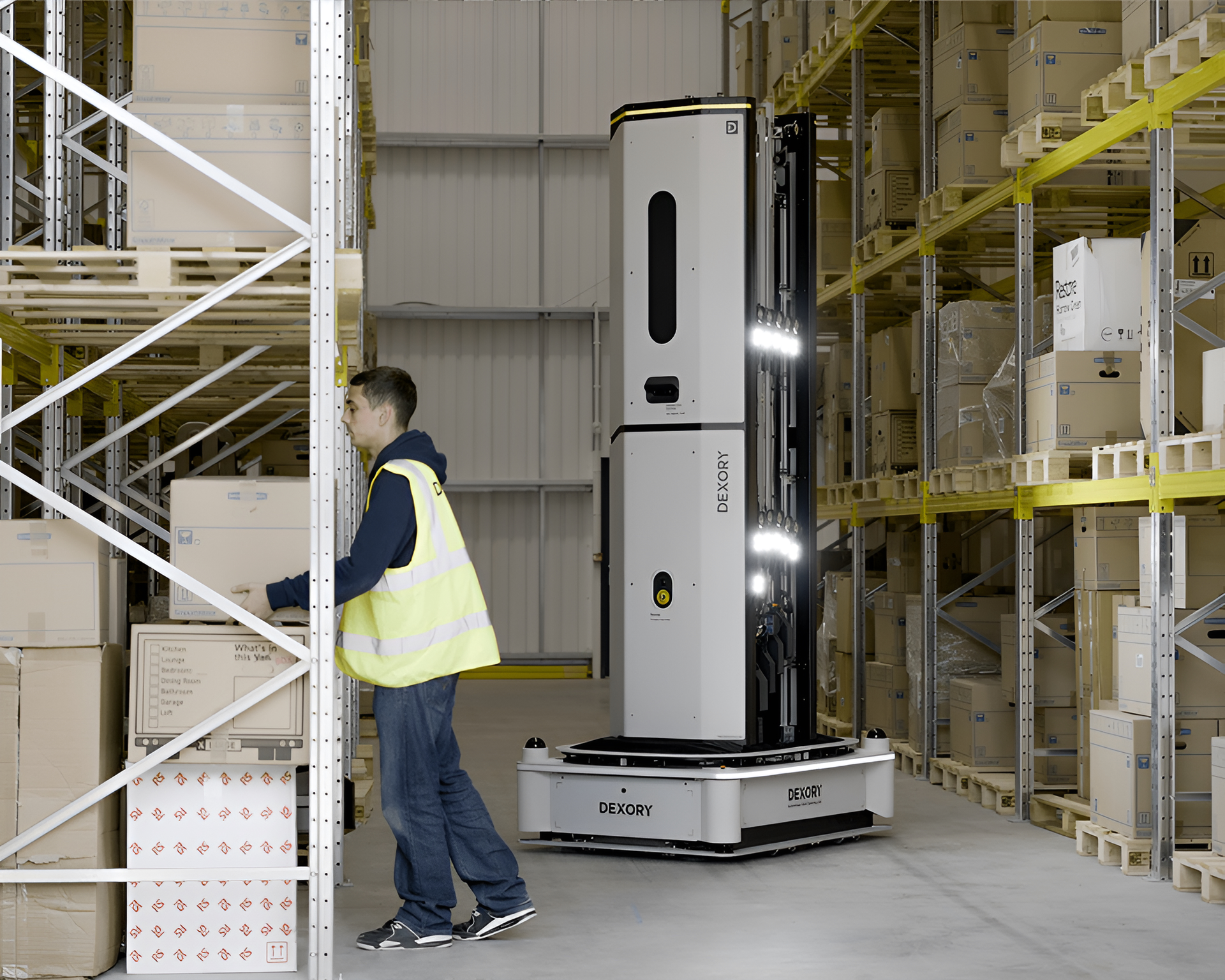
Forecasting is easy. Getting it right isn’t. We asked four spokespeople at warehouse robot and intelligence platform specialists Dexory to put on record the likely trends for the year ahead.

Autonomous robots

First up is Dr. Marcus Scheunemann, Head of Autonomy for Dexory, who believes the top trend will be the subject of autonomous robots: “2026 will mark a significant step towards full autonomy for robots. Advances in AI paired with increasingly sophisticated robotic control systems are allowing autonomous machines to interpret their surroundings more precisely and manage unpredictable situations better. As these technologies mature together, we will see a noticeable shift in what autonomous robots can reliably handle without human input.

“This shift will pave the way for organisations to operate entire fleets with far less day-to-day oversight. If this pace continues, it’s fair to say we will reach a point where most routine operational tasks could run independently, with only very unusual scenarios still requiring human support. Achieving this level of autonomy within the next two to three years would set a new standard for how autonomous systems perform in real-world environments and represent a significant milestone for the entire robotics sector.”

Warehouse visibility

Todd Boone, Vice President North America, Dexory picked the issue of visibility in warehouses: “In 2026, true warehouse intelligence based on data rather than assumptions will shift from being a novelty to becoming a standard expectation. Customers will increasingly require insights they can act on, drawn from rich and comprehensive data sets rather than simply faster inventory counts.

“As this shift accelerates, the limitations of drone-based solutions will become more apparent because they do not capture enough of the right data to meaningfully influence operations at scale. As warehouse visibility and analytics mature, organisations will expect full-spectrum intelligence, making partial solutions far less viable.”

Agentic warehouses

Divya Gautam, Head of AI, Dexory focuses on agentic AI: “2026 will be the year the warehouse becomes ‘agentic’. The industry will move beyond passive visibility, where AI surfaces endless unprioritised alerts, to active intelligence where autonomous systems interpret context, reasons, and recommend the next best action. Competitive advantage will shift to warehouses that turn raw data into autonomous decision-support by using AI agents that collaborate with human teams to resolve issues faster and more accurately.”

Collaborative agents

Finally, Oana Jinga, Chief Commercial & Product Officer & Co-Founder of Dexory, opted to discuss collaborative agents: “In 2026, multi-AI agent systems will become the backbone of next-generation warehouse automation. Instead of a single monolithic software controlling operations, warehouses will deploy collaborative AI agents — each specializing in tasks such as real-time inventory perception, traffic optimization, predictive maintenance, labour allocation, and exception handling. These agents will communicate continuously with each other and with fleets of autonomous robots, enabling a fluid, self-optimizing warehouse ecosystem.”

8 Areas to optimise

The warehousing industry is evolving faster than ever. Rising customer expectations, growing SKU complexity and global supply chain pressures demand faster fulfilment, better use of space, and uncompromising safety. Yet for many warehouses, inefficiency persists – lost pallets, underused aisles, and inconsistent data updates. The question is no longer if automation drives ROI, but how fast you can capture it.

That’s where optimisation comes in. High levels of stock integrity mean warehouses can operate with faster, more reliable workflows and optimal use of resources. But once inventory health and visibility are firmly in place, the next step is to unlock the full potential of your operations through targeted, AI-driven optimisation strategies.

By enhancing the flow of goods, maximising space utilisation, and refining processes, operations can keep pace with rising demand with precision and speed. Dexory outlines eight areas for warehouse optimisation – from real-time visibility and block stack digitisation to AI-powered consolidation planning and weight restriction monitoring:

  1. Inventory integrity as the cornerstone of efficient operations
    High levels of stock integrity mean warehouses can operate with faster, more reliable workflows and optimal use of resources, while enabling confident decision-making and minimising operational disruptions.
  2. Real-time visibility that turns blind spots into insights
    Only 6% of logistics companies report full visibility over their operations. This gap can mean missed opportunities, safety risks, and slower fulfilment.
  3. Block stack storage visibility without disruption
    What if you could eliminate the blind spots in deep storage areas? No more guessing, lifting, or forklift repositioning. Just evaluating discrepancies in real time, such as missing, miscounted, or incorrectly placed items.
  4. Pick face optimisation for smarter cycle counts
    Every day, the WMS generates a cycle count list. You know most of it is wasted effort, but you still have to check every single location. Instead, how about shrinking the cycle, freeing up resources, and finally getting control of your pick face locations with maximum efficiency?
  5. Maximising storage utilisation
    AI-powered consolidation planning can identify opportunities to group compatible items together while avoiding conflicts like mismatched batch codes or incompatible products. This reduces wasted space and unproductive travel time between storage locations. Optimal space utilisation and efficient stock handling bolster long-term reputational gains by showcasing operational excellence and dependability.
  6. Improved compliance and safety with advanced slotting verification
    Every warehouse faces risks from incorrect slotting. By aligning slotting with both safety and efficiency, warehouses ensure that they remain audit-ready, compliant, and secure.
  7. Faster fulfilment, no picking delays
    Poor replenishment leads to picker delays, slow order fulfilment and reduction in storage efficiency. But with advanced robotics and automation systems, warehouses can achieve faster fulfilment and throughput without extra headcount.
  8. Weight restriction monitoring for safer, risk-free warehouses
    Overloaded bays and racks put staff and infrastructure at risk. Manual checks are slow, error-prone, and often inconsistent. At the same time, WMS rules are static, they don’t
    prevent live overloads. With the right use of automation, warehouses can ensure risk-free operations where safety is never compromised.

Specialist Deliveries in Franchise Logistics

InXpress, a specialist in international and complex logistics solutions, has reached a key milestone after completing over 100,000 specialist delivery loads through its strategic partnership with TEG, a fintech-enabled platform serving transport and logistics, as e-commerce growth reshapes customer expectations.

For InXpress, this challenge became critical as rapid global e-commerce growth fundamentally changed customer expectations – driving demand for same-day delivery, white glove services, and bespoke urgent shipments that traditional franchise networks couldn’t provide.

We were at risk of losing customers who needed same-day delivery, white glove handling, or urgent shipments that our network couldn’t provide… This partnership combines our customer relationships and local presence with TEG’s carrier network and technology. Together, we’re enabling same-day, white-glove and urgent services.

said Jon White, Chief Commercial Officer EMEA at InXpress.

Through TEG’s end-to-end platform, InXpress franchisees across 450 offices in 14 countries gained access to specialist carrier networks without building new infrastructure, enabling them to compete for business previously beyond their reach. The integration provides franchisees with improved service reliability, real-time tracking, and data-driven performance benchmarking.

Through the platform, InXpress franchisees have won contracts with e-commerce businesses and retailers demanding premium services. “The scale InXpress has achieved shows how the right platform gives distributed networks the same capabilities as centralised operations – without the infrastructure costs. Technology removes barriers to scale – enabling distributed networks to compete at any scale without capital investment,” added Sam Wilkinson, Chief Revenue Officer at TEG.

InXpress is now targeting 1,000 franchise locations in key markets as it capitalises on the e-commerce boom, supported by TEG as it accelerates plans to scale operations through 2030.

AI-based Simulator to Optimise Inventory

The Massachusetts Institute of Technology (MIT) Center for Transportation & Logistics and Mecalux have developed an artificial intelligence-based simulator capable of optimising inventory distribution across different warehouses within the same logistics network. The platform, called Genetic Evaluation & Simulation for Inventory Strategy (GENESIS), uses advanced machine learning models to analyse thousands of possible scenarios and determine the optimal stock level at each warehouse and when replenishment should occur.

The AI-based simulator takes into account variables such as forecast demand in each region, transport costs and the operational capacity of each warehouse to test various inventory replenishment policies without affecting real-world operations. “The genetic algorithm enables multiple simulations to be run using different parameters until the most efficient logistics strategy is identified. Companies can compare scenarios and select the one that best fits their operations,” says Dr. Matthias Winkenbach, Director of Research at the MIT Center for Transportation & Logistics and the Intelligent Logistics Systems Lab.

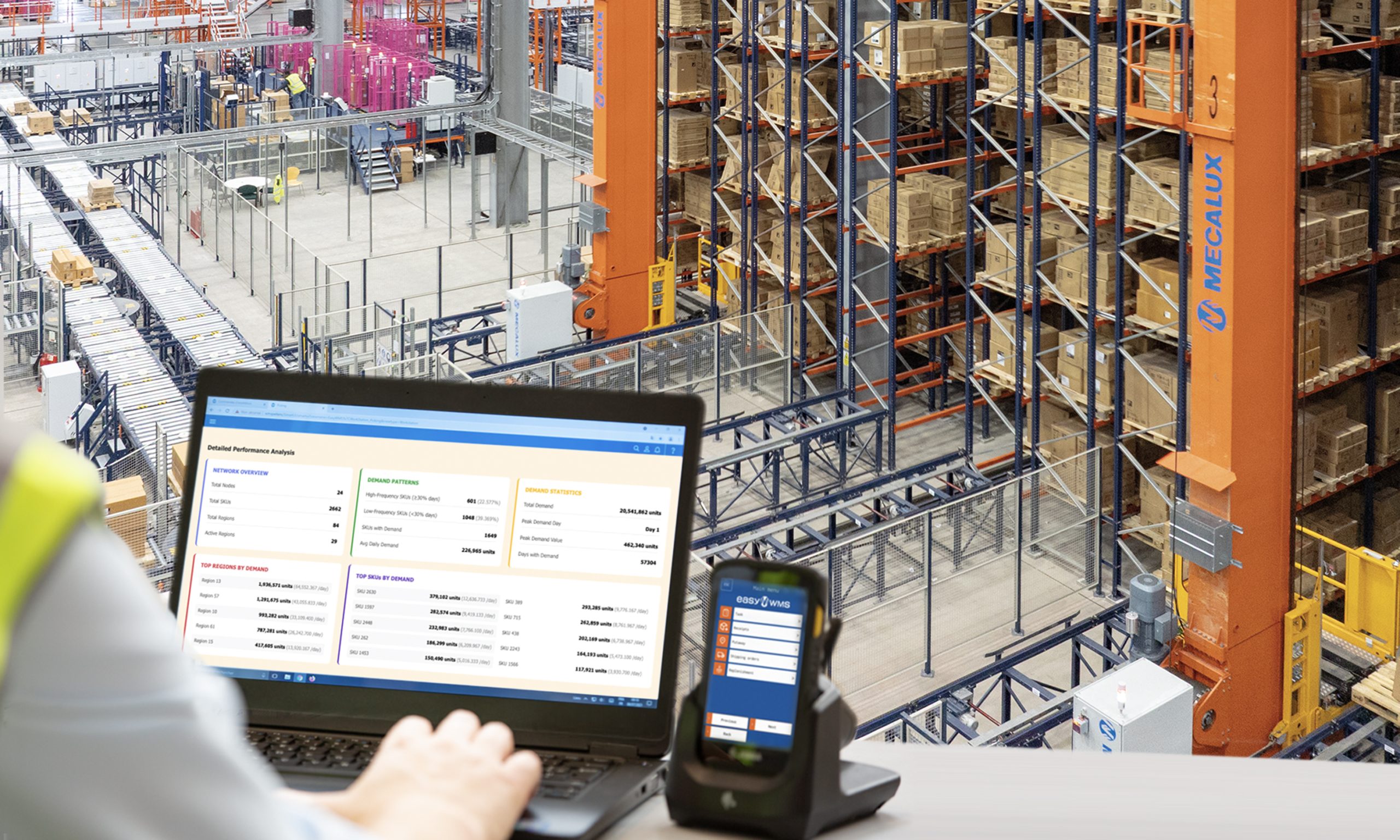
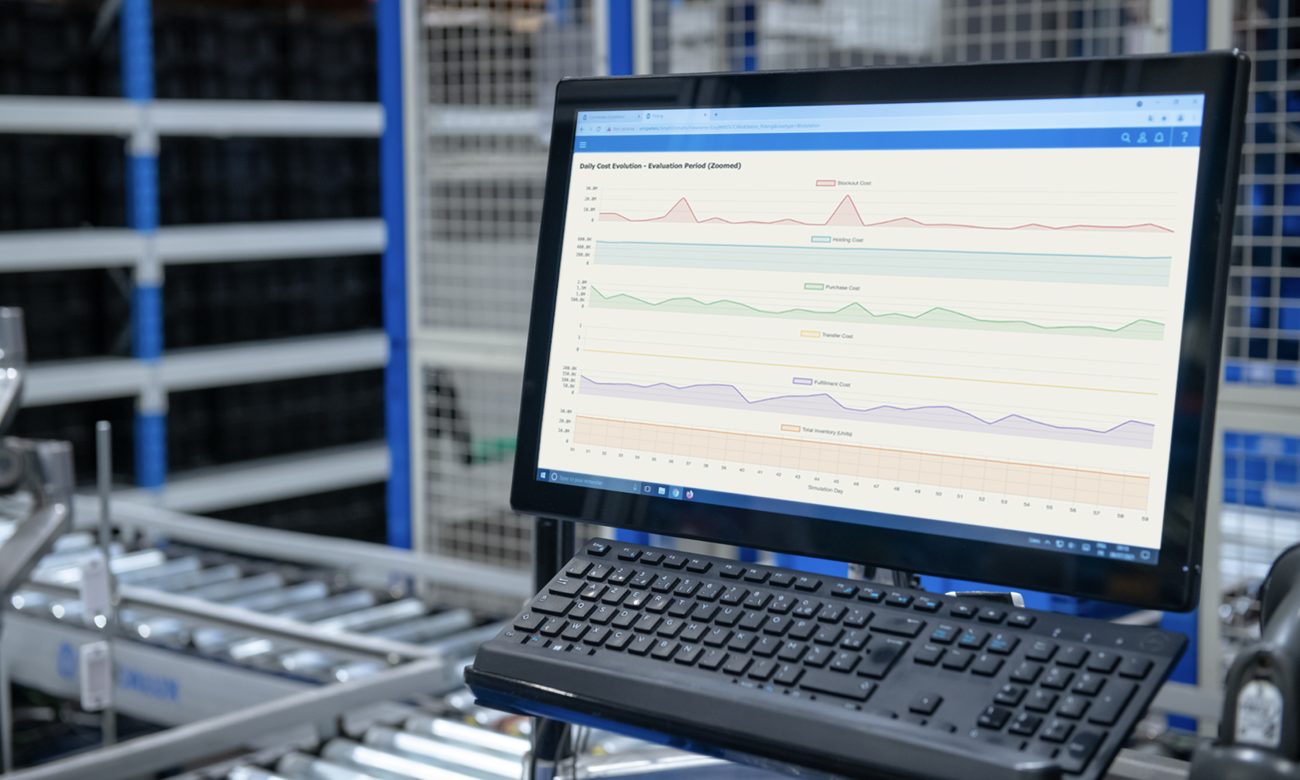
Once data and variables are entered into the system, GENESIS generates the optimal solution along with advanced statistical dashboards. Users can analyse indicators such as consumption patterns, regions with high demand variability, SKUs with a greater risk of stockouts or warehouses experiencing supply issues.

Redistribute before purchasing

One of the system’s key features is its ability to rebalance inventory across warehouses. Instead of automatically placing new orders with suppliers, the tool analyses whether it is more efficient to transfer products from another facility within the network where excess inventory is available. In this way, companies can reduce costs and make better use of existing stock.

The system also recommends how to organise transport. For example, it suggests whether shipments should be consolidated to optimise truckloads or whether specific orders should be fulfilled from a particular location to reduce delivery times and costs.

“The real challenge wasn’t finding the right algorithm — it was making it fast enough to be practical. We developed GENESIS from the ground up to evaluate thousands of scenarios simultaneously rather than sequentially. What used to take days now takes minutes, which means companies can use it for real tactical planning, not just theoretical analysis,” says Rodrigo Hermosilla, Research Engineer at the MIT Intelligent Logistics Systems Lab.

Unlike analytical solutions reserved for specialised users, GENESIS is designed for both technical teams and business decision-makers. “The goal is to help companies minimise the total cost of their logistics network while ensuring the highest service level,” says Javier Carrillo, CEO of Mecalux.

Upcoming AI applications

The AI-powered simulator is one of the first tangible results of the joint initiative between Mecalux and MIT CTL. The collaboration is now entering a new phase focused on expanding the application of AI to other logistics processes, such as internal replenishment, digital twins in high-density automated storage systems, and slotting optimisation.

The MIT Center for Transportation & Logistics (MIT CTL) is a world leader in supply chain management research and education, with over 50 years of expertise. The centre’s work spans industry partnerships, cutting-edge research and driving supply chain innovation into practice through three pillars: research, outreach and education

Subscribe

Get notified about New Episodes of our Podcast, New Magazine Issues and stay updated with our Weekly Newsletter.